

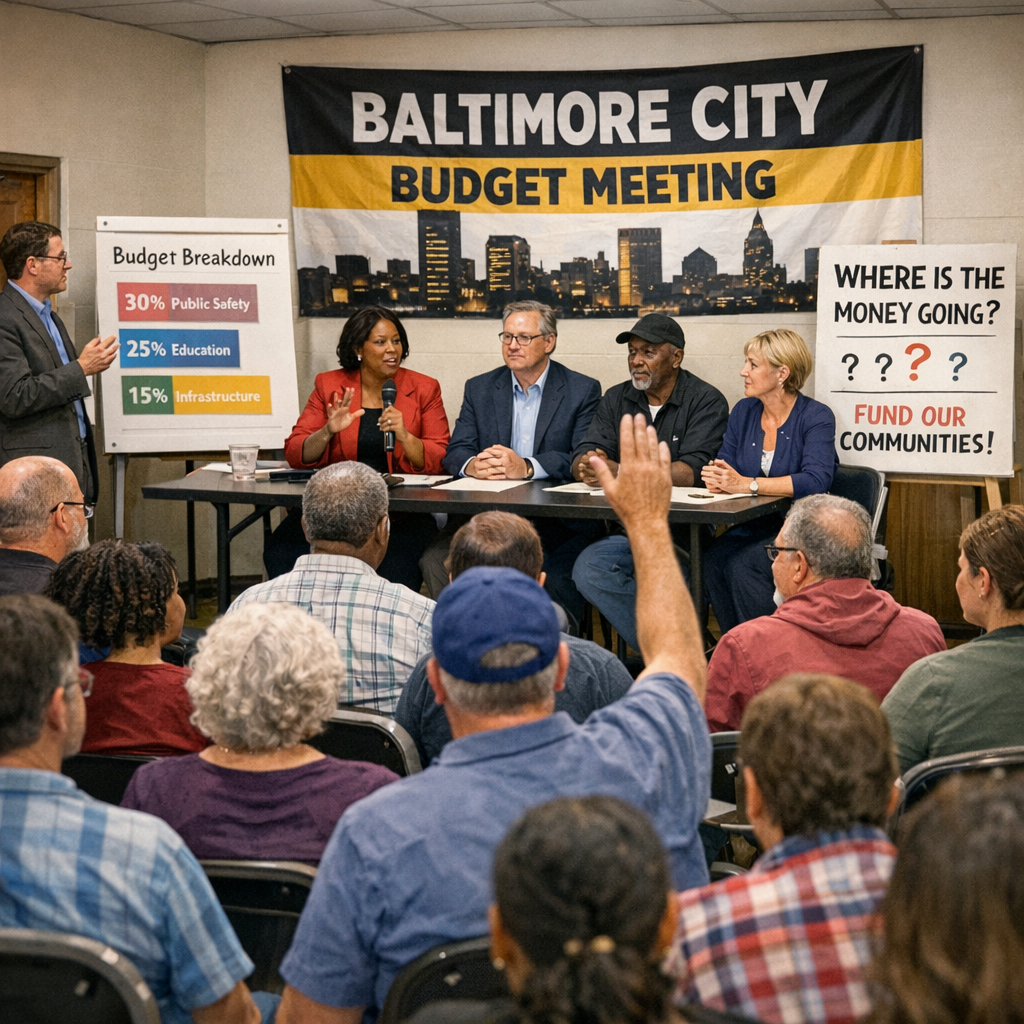
In recent community budget forums, Baltimore residents have actively engaged with city leaders to highlight pressing issues affecting their neighborhoods. Key concerns include public safety, the prevalence of vacant homes, and limited access to fresh food.
Public Safety and Vacant Homes
Residents have expressed unease about safety in their communities. For instance, Brandon Dismel, a northwest Baltimore resident, shared his family’s apprehensions: “It’s bad when your grandmother doesn’t feel safe with you walking up the street and there’s a police station right behind you.” He also recounted a personal tragedy, noting, “I just had a cousin I lost about two months ago that was found in one of those vacant homes.” These statements underscore the intertwined challenges of crime and abandoned properties in the city.
Access to Fresh Food
In neighborhoods like Cherry Hill, the lack of grocery stores has been a longstanding issue. Resident Janice Samuel highlighted this concern, stating, “[The things proposed in the budget] are important and imperative, however, we have a fitness center, but we don’t have fresh foods. Many people in this community are unable to drive.” This situation has led to Cherry Hill being labeled a “food desert,” where residents face significant challenges in obtaining nutritious food options.
City’s Response and Budget Allocations
In response to these community concerns, Mayor Brandon Scott emphasized the importance of balancing various needs within the city’s budget. The preliminary budget includes substantial allocations aimed at addressing these issues:
- $1.3 billion for enhancing public safety
- $1 billion in capital investments
- $1.1 billion for maintaining clean, safe, and healthy neighborhoods
- $645.3 million in youth programming
- $380.6 million for economic development
Mayor Scott acknowledged the challenges in meeting diverse community needs, stating, “You balance it all by understanding that those people are the why. Many of those folks are seniors. They are the ones that helped the city stay afloat for all those years. Now it’s my job to make sure that we’re serving them better.”
Community Engagement and Next Steps
The city has encouraged residents to participate in the budget process. Upcoming opportunities for public input include the Board of Estimates’ Taxpayers’ Night and subsequent public hearings by the Baltimore City Council. These forums provide residents with a platform to voice their concerns and influence budgetary decisions that directly impact their communities.
As the budget process progresses, the active involvement of Baltimore’s residents remains crucial in shaping policies that address the city’s most pressing issues.