
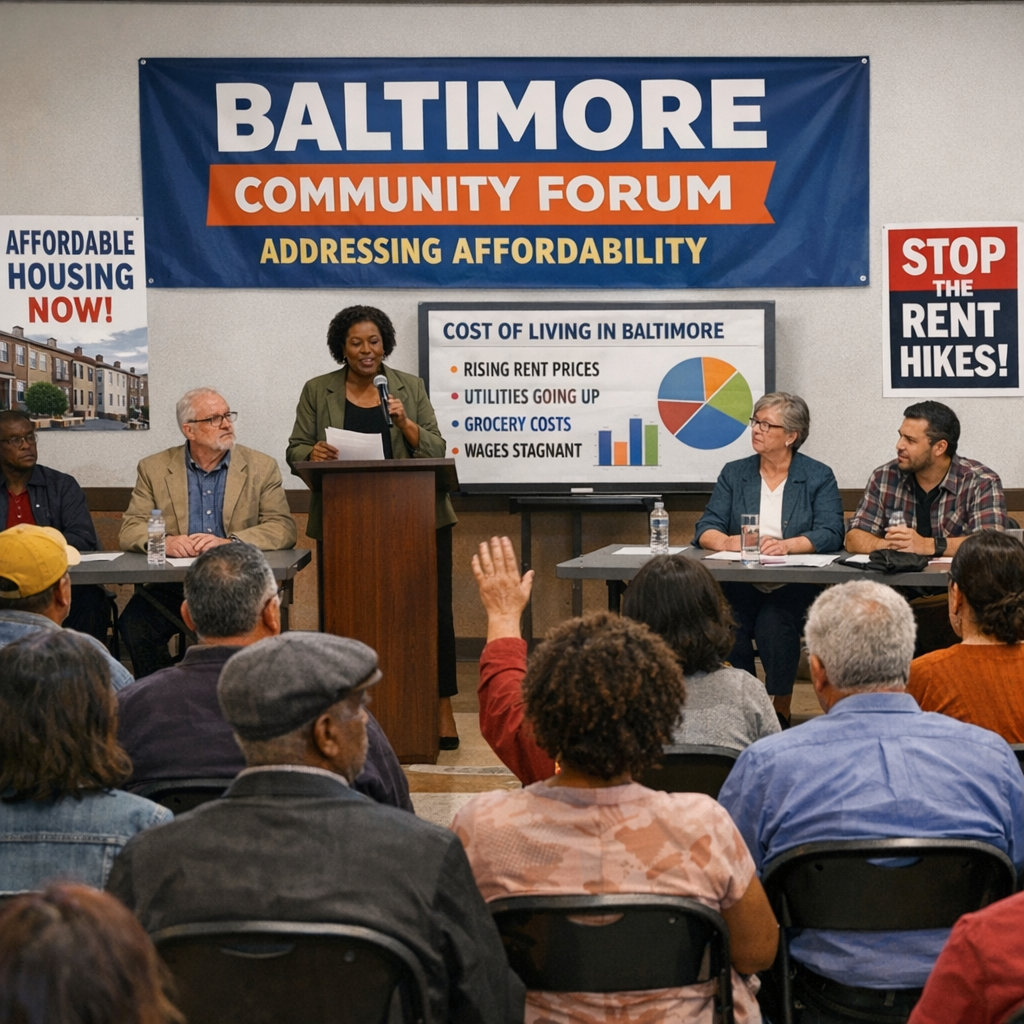
In recent months, Baltimore residents have voiced growing concerns over the rising costs of essential services, including housing, utilities, and healthcare. Community forums and surveys have highlighted these pressing affordability challenges, prompting discussions on potential solutions.
Community Forums Highlight Resident Concerns
At a recent community budget forum, residents from various neighborhoods gathered to share their priorities with city leaders. Topics ranged from public safety to the prevalence of vacant homes, but a recurring theme was the financial strain many households are experiencing. Mayor Brandon Scott acknowledged the need to balance these diverse community needs, emphasizing that residents are central to budget decisions.
Survey Reveals Widespread Affordability Issues
A survey conducted by Johns Hopkins University shed light on the extent of affordability challenges in Baltimore. Approximately one-third of respondents reported difficulties covering medical expenses and paying utility bills on time over the past year. Additionally, 20% of participants experienced food insecurity, and 75% of city residents expressed concern about future housing costs. These findings underscore the economic pressures facing many in the Baltimore metro area.
Community Initiatives and the Path Forward
In response to these challenges, various community organizations and local leaders are working to develop strategies that address affordability issues. Efforts include advocating for increased funding for public services, implementing programs to assist with utility payments, and promoting access to affordable healthcare. Continued collaboration between residents, community groups, and city officials is essential to create sustainable solutions that improve the quality of life for all Baltimoreans.
As the city navigates these complex issues, the voices of its residents remain crucial in shaping policies that reflect the community’s needs and aspirations.