

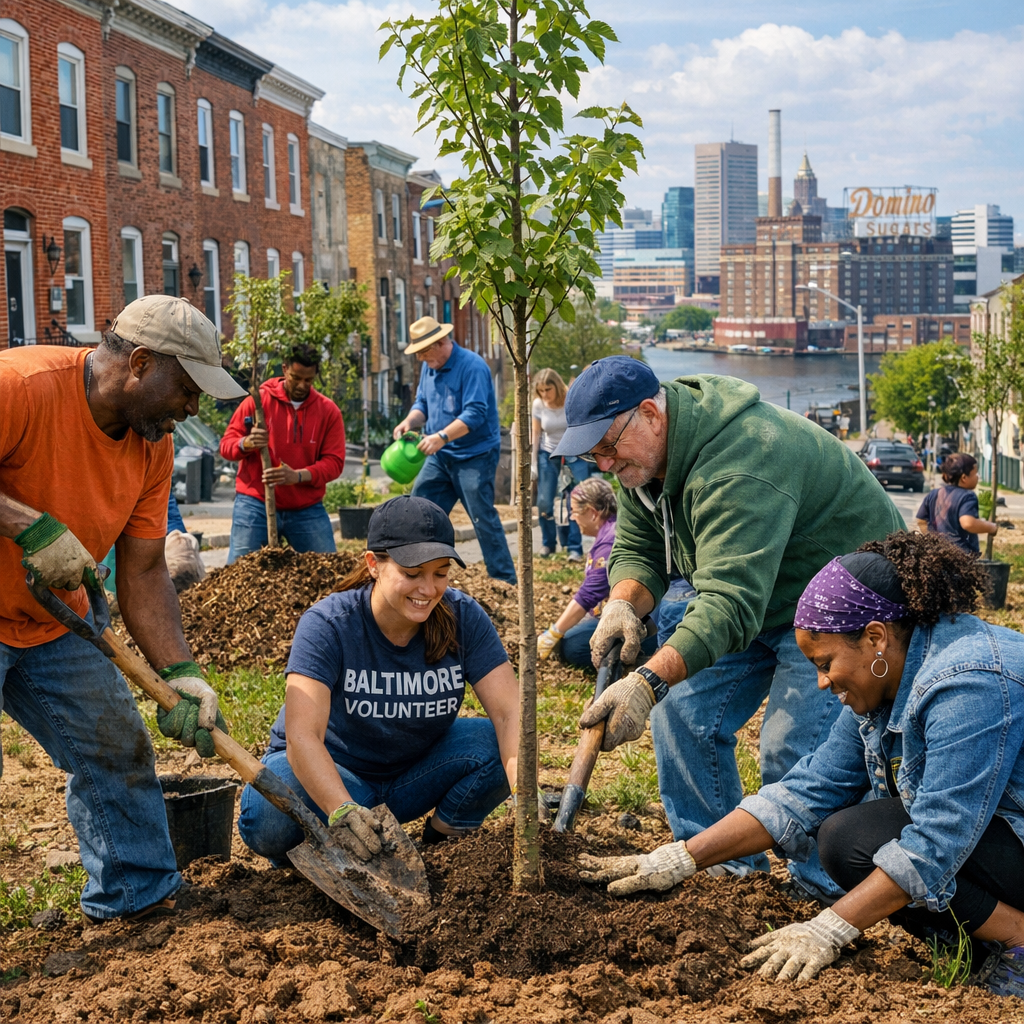
Baltimore is actively engaging in various environmental initiatives to promote sustainability and resilience. These efforts encompass community-driven projects, academic collaborations, and city-wide programs.
Community-Driven Environmental Projects
Local organizations are spearheading projects to improve water quality, enhance habitats, and create a more sustainable environment. For instance, the Environmental Justice Journalism Initiative (EJJI) collaborates with educational institutions to conduct research and educational experiences along the Middle Branch of the Patapsco River. Their projects include fish species collection programs, floating wetlands installations, and oyster farm prototypes, all aimed at restoring and preserving the local ecosystem.
Academic Collaborations
Johns Hopkins University is assisting Baltimore in quantifying its greenhouse gas emissions to track progress toward climate neutrality by 2045. This collaboration involves calculating emissions from buildings, transportation, waste, and energy use, providing valuable data to inform the city’s climate action strategies.
City-Wide Programs
The Baltimore Office of Sustainability has set ambitious goals to reduce greenhouse gas emissions, aiming for a 30% reduction by 2025, 60% by 2030, and complete carbon neutrality by 2045. To achieve these targets, the city is implementing various strategies, including enhancing energy efficiency in buildings, promoting sustainable transportation options, and improving waste management practices.
These collective efforts reflect Baltimore’s commitment to environmental stewardship and the active role of its community in fostering a sustainable future.