

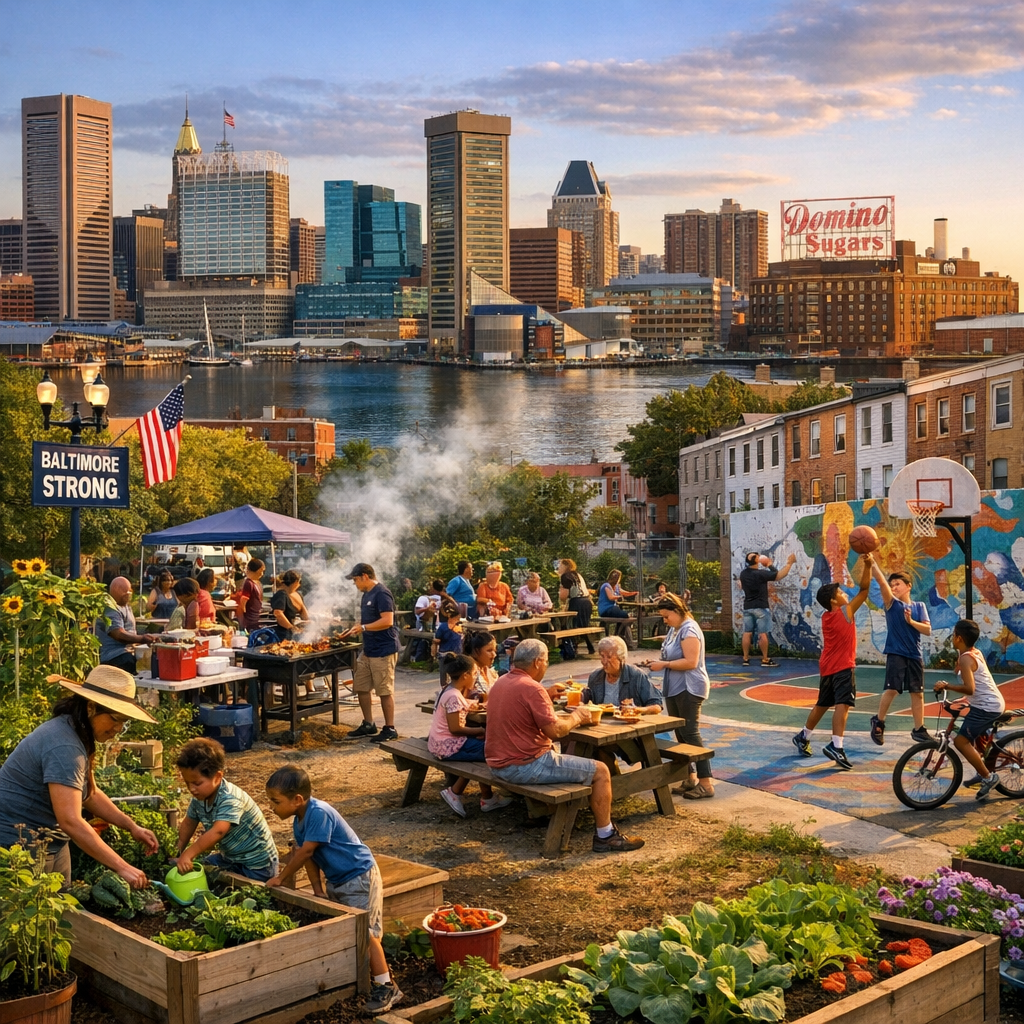
Baltimore has faced its share of challenges, from economic disruptions to infrastructure setbacks. However, the city’s proactive measures and community resilience have played a pivotal role in mitigating the impacts of these national crises.
Economic Resilience Post-Key Bridge Collapse
In March 2024, the Francis Scott Key Bridge collapsed after being struck by a cargo ship, leading to concerns about significant economic repercussions due to the temporary closure of the Port of Baltimore. The port is a vital hub, handling a substantial volume of cargo annually. Despite initial fears, swift federal and state responses facilitated a rapid reopening of the shipping channel, averting a prolonged economic crisis. This prompt action underscored the importance of coordinated efforts in maintaining economic stability during unforeseen events.
Addressing Crime with Community Initiatives
In recent years, Baltimore has implemented holistic approaches to public safety, focusing on community investment and violence intervention programs. These initiatives have contributed to a notable decline in crime rates. For instance, in 2024, the city recorded 201 homicides, the lowest annual total in over a decade, marking a 23% drop from the previous year. This trend continued into 2025, with August recording the lowest number of homicides on record for that month. Such progress highlights the effectiveness of community-centered strategies in enhancing public safety.
Environmental Challenges and Swift Responses
Environmental incidents, such as the 2,000-gallon diesel fuel spill in Baltimore’s harbor, have tested the city’s emergency response capabilities. The spill prompted a large-scale, coordinated response involving state, city, and U.S. Coast Guard officials. Over 100 personnel worked overnight to contain the spill, deploying booms and using skimmers to remove the fuel from the water. Despite the red tint in the water caused by dye in the diesel, officials emphasized that the spill did not impact the area’s drinking water. This incident demonstrated the city’s ability to effectively manage environmental crises through prompt and coordinated action.
Conclusion
Baltimore’s experiences with national challenges underscore the city’s resilience and proactive approach to crisis management. Through coordinated efforts, community engagement, and strategic initiatives, Baltimore continues to navigate and mitigate the impacts of national crises, serving as a model for other cities facing similar challenges.