

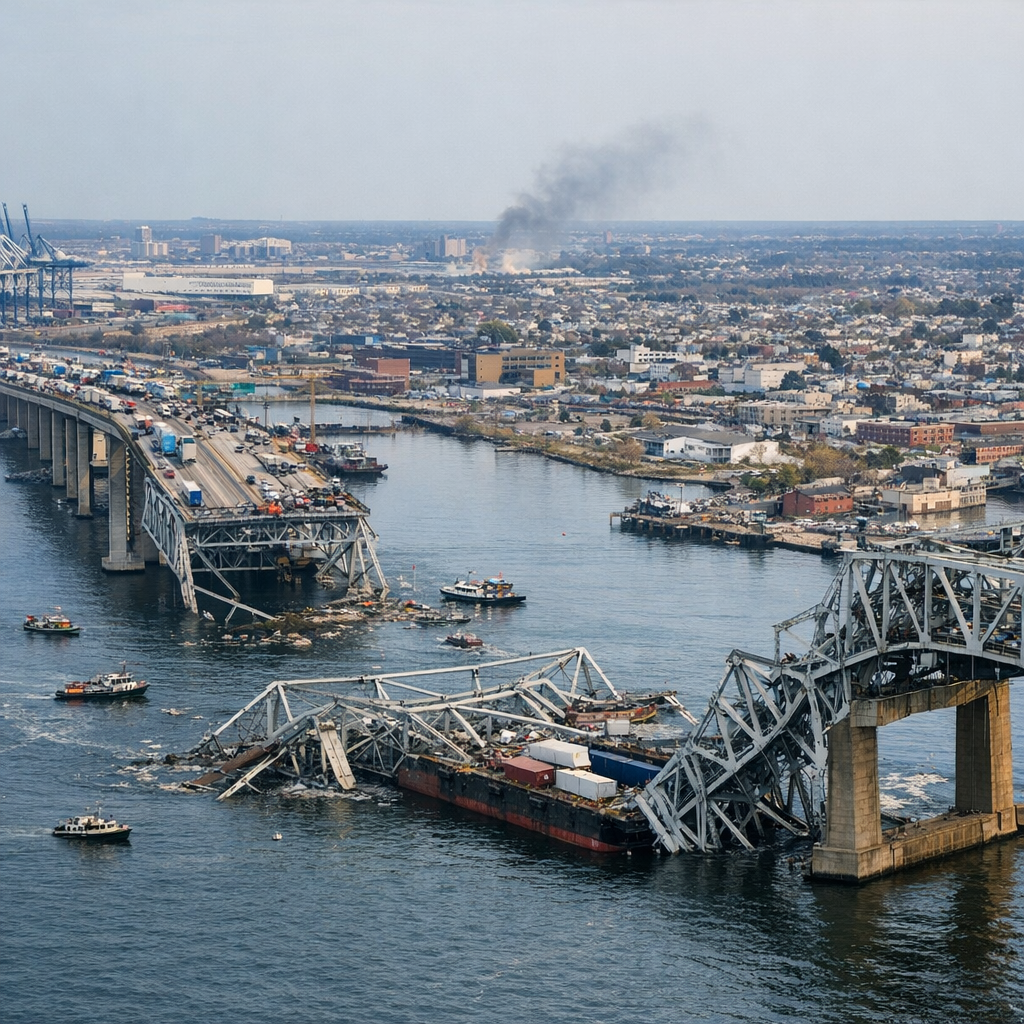
Infrastructure is the backbone of any thriving community, facilitating commerce, connectivity, and daily routines. However, when national infrastructure fails, the repercussions are deeply felt at the local level. Baltimore has experienced this firsthand with the collapse of the Francis Scott Key Bridge, a critical artery for the region.
The Immediate Aftermath
On March 26, 2024, the Francis Scott Key Bridge collapsed, disrupting traffic and altering the daily lives of countless Maryland residents. Commuters like Pam Moffett, who relied on the bridge for a manageable commute, found their travel times nearly doubled. Moffett, a Dundalk resident working in College Park, faced such unbearable commutes that she opted to rent a room closer to work. This incident underscores how infrastructure failures can force individuals to make significant lifestyle changes. [Source: Maryland Matters]
Community Disruptions
The bridge’s collapse didn’t just affect commuters. Local businesses in areas like Dundalk reported increased truck traffic through neighborhoods, leading to safety concerns and infrastructure strain. Residents noted that heavy commercial vehicles, rerouted due to the bridge’s absence, caused road damage and even water main breaks. Such disruptions highlight the cascading effects of a single infrastructure failure on community well-being and local economies. [Source: CNS Maryland]
Broader Implications
Beyond the immediate vicinity, the collapse had a ripple effect throughout Baltimore. A survey conducted by Johns Hopkins University’s 21st Century Cities Initiative found that nearly half of Baltimore-area residents reported that the bridge collapse impacted their daily lives. Challenges included difficulties in visiting family and friends, running errands, and accessing essential services. This data emphasizes the widespread nature of infrastructure failures and their ability to disrupt the fabric of daily life. [Source: Hub]
Looking Ahead
While efforts are underway to rebuild the bridge and restore normalcy, the incident serves as a stark reminder of the importance of maintaining and investing in infrastructure. For Baltimore, and cities nationwide, proactive measures are essential to prevent such failures and ensure the safety and stability of communities. As we move forward, it’s crucial to prioritize infrastructure resilience to safeguard against future disruptions.