

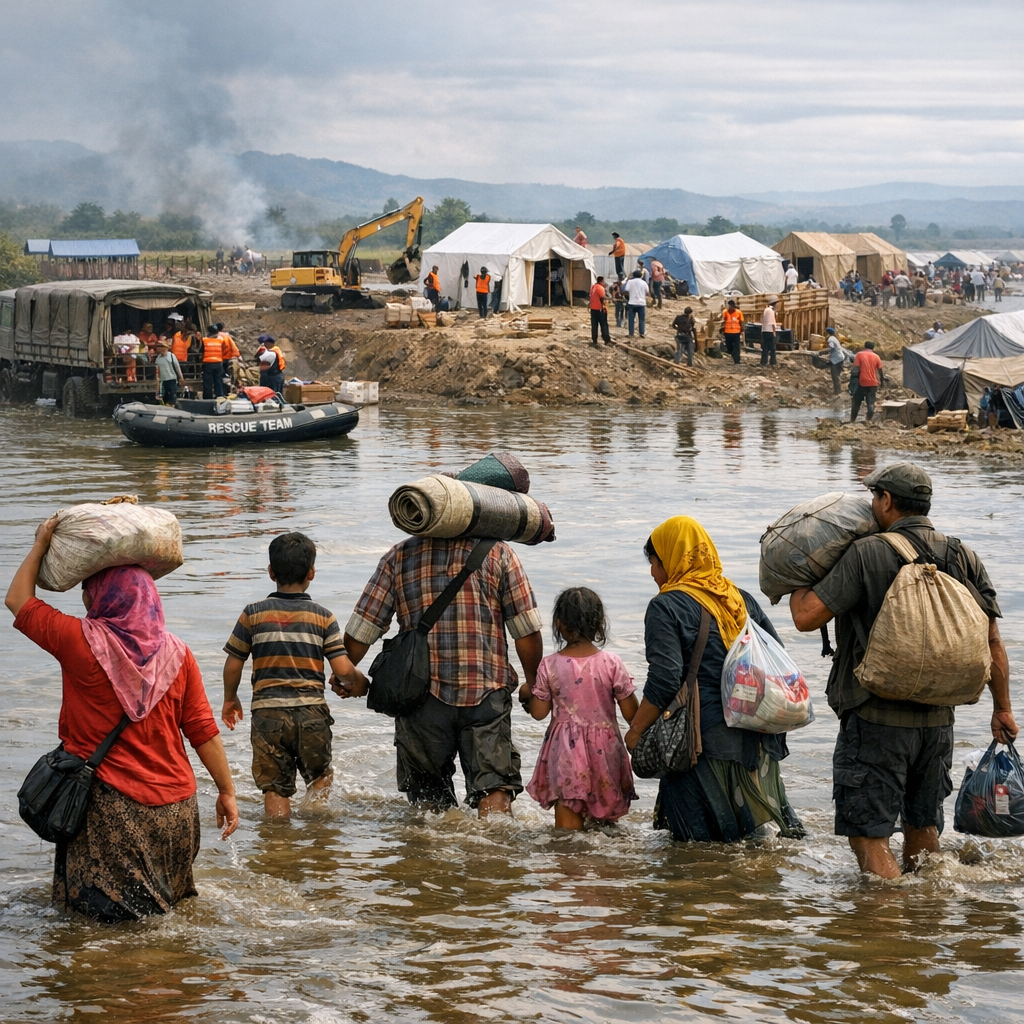
Climate change is transforming how and where people live. As disasters increase and environmental challenges become more persistent and severe, human mobility tied to both sudden events and gradual changes is on the rise. For Baltimore’s global-minded community, this calls for awareness of not just distant effects, but global trends reshaping societies everywhere.
From displacement to adaptation: what climate mobility means
People move for many reasons: work, family, education, safety. Climate mobility refers to movement—temporarily or permanently—caused by environmental pressures such as rising seas, drought, desertification and extreme weather. While global projections estimate hundreds of millions may move internally by 2050 if mitigation and adaptation fail, many already displaced stay within national borders in the immediate aftermath of disasters. Slow-onset impacts—erosion, soil decline, water loss—often accumulate quietly until staying becomes untenable.
Where global governance is stepping in
International actors like the United Nations Framework Convention on Climate Change are addressing climate-related displacement. The Task Force on Displacement develops tools to integrate mobility concerns into national climate planning, with an eye toward avoiding humanitarian fallout. Meanwhile, new data tracking systems are being deployed globally to capture the experiences of marginalized communities often missed in large-scale projections.
Local responses are vital
On the ground, communities, Indigenous groups, and local governments are filling the gaps. Examples include participatory mapping, disaster-risk reduction initiatives, and adaptive infrastructure. These actions often link climate action with migration governance and social protection. When planned early, they allow people to stay safely, relocate sustainably, and preserve cultural and economic ties.
Policy priorities going forward
- Build legal pathways for those displaced by climate impacts, including temporary protections and support for planned relocation.
- Invest in early warning systems and climate resilience to reduce forced displacement before it occurs.
- Ensure migration decisions are locally informed—policy should reflect lived experience, not just high-level models.
- Strengthen global cooperation—climate mobility is an international issue that crosses borders and requires shared standards.
For people in Baltimore and beyond, climate mobility isn’t just a distant headline—it’s part of a global shift reshaping families, economies, and our shared future. Understanding it helps us engage more thoughtfully, advocate more effectively, and prepare more compassionately.