

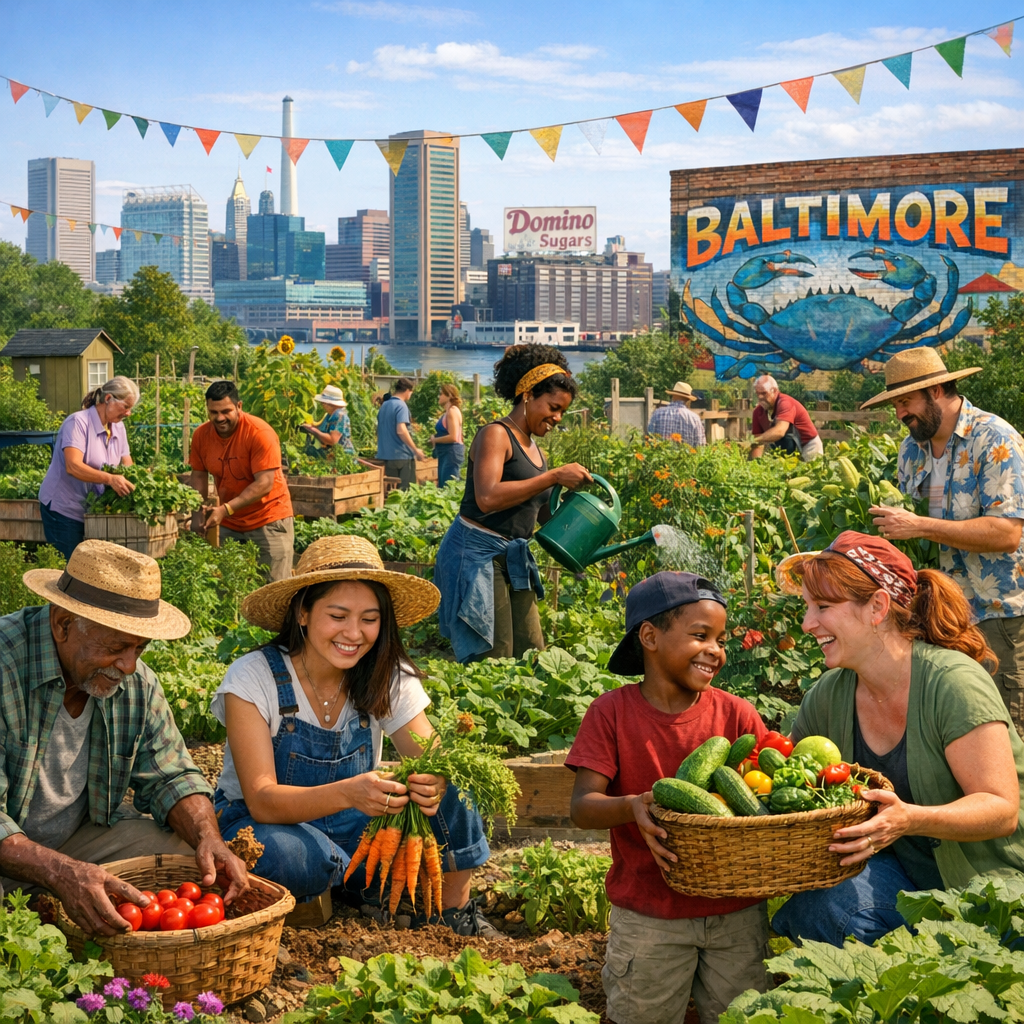
In the heart of Baltimore, amidst its bustling streets and historic neighborhoods, a quiet revolution is taking root. Community gardens are sprouting across the city, transforming vacant lots into vibrant green spaces that nourish both the body and the spirit.
The Blossoming of Community Gardens
One such example is the World Peace Garden in the Chinquapin Park neighborhood. Established on the grounds of the Kadampa Meditation Center Maryland, this 1.75-acre urban oasis serves as a sanctuary for meditation and reflection. The garden is a collaborative effort involving local organizations like the Chesapeake Bay Trust and Blue Water Baltimore, emphasizing the power of community partnerships.
Similarly, the Homeland Garden Club, founded in 1926, has been a cornerstone of Baltimore’s gardening community. Celebrating its centennial, the club continues to promote education and sustainability through workshops, garden tours, and hands-on projects, uniting gardening enthusiasts from across the city.
Addressing Food Insecurity
Beyond beautification, these gardens play a crucial role in addressing food insecurity. Pigtown Food For Thought is a diverse group of neighbors in the Pigtown area dedicated to improving food access and providing healthy food-related education. Their community garden offers residents the opportunity to grow their own produce, fostering self-reliance and nutritional awareness.
In Northeast Baltimore, BLISS Meadows has transformed a 10-acre abandoned site into a thriving urban farm. With initiatives like a market garden, summer camp, and orchard, BLISS Meadows provides fresh produce to the community and offers educational workshops on nutrition and food preparation.
Fostering Education and Environmental Stewardship
Education is a cornerstone of many community gardens. The Filbert Street Community Garden in South Baltimore offers programs on gardening, animal husbandry, and local wildlife. Established in 2010, this one-acre plot has become a hub for recreation and learning, featuring goats and a 4,000-square-foot native garden.
In the Harwood neighborhood, the Harwood Community Garden invites residents to participate in communal planting and harvesting. With 22 raised beds, the garden operates on a “take what you want, but eat what you take” philosophy, encouraging responsible consumption and community engagement.
Preserving Green Spaces
Organizations like Baltimore Green Space play a vital role in preserving these urban oases. As a nonprofit land trust, they protect community gardens, pocket parks, and urban forests from development, ensuring that these spaces remain accessible for future generations. Their support extends to over a hundred community-managed open spaces throughout the city.
Conclusion
Baltimore’s community gardens are more than just plots of land; they are symbols of resilience, unity, and hope. They provide fresh produce, educational opportunities, and a sense of belonging. As these gardens continue to flourish, they remind us of the power of community and the importance of nurturing both our environment and our connections with one another.